Today I'm going to tell you how to know, in less than a minute, if a shoe is truly barefoot or if it simply has the word “barefoot” stuck on the box. And along the way, you'll understand why sole thickness doesn't work the way many people think... and what grounding has to do with all of this now.
How to identify a real barefoot shoe
1. Width in the front
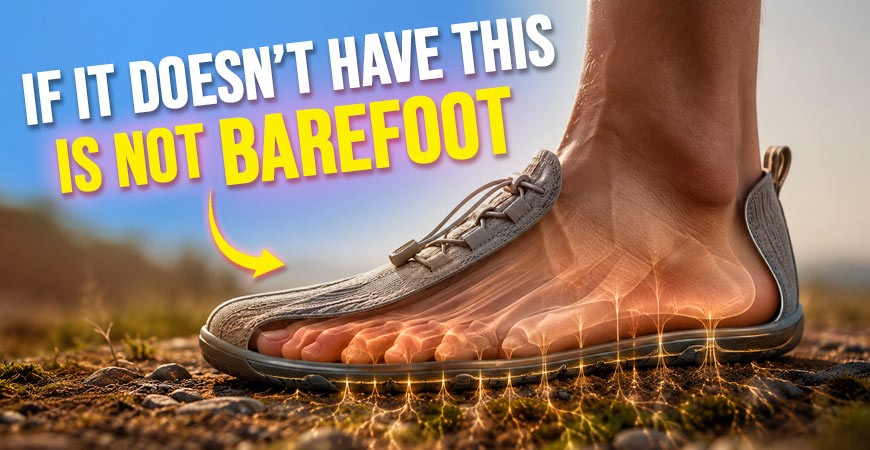
I'll start with the most well-known point: “A barefoot shoe is a wide shoe.” Yes, but the width that matters is at the front. Look at your bare foot: it splays at the toes. Now look at any conventional shoe: they end in a point.
And what do most people do? They stuff their feet into a shoe that forces the toes together like a subway train at rush hour and forces the big toe to lean inward. You really have to see it to believe it.
2. Drop (Zero Drop)
Second point: drop. Drop is the difference in height between the heel and the front. In barefoot, we look for 0 mm or very little, usually up to about 4 mm.
When the heel is elevated, you no longer support your foot the same way as when barefoot. And that small change modifies how your ankles, knees, hips, and the rest of your body align and work.
3. Total flexibility
Third point: take the shoe. Twist it. Bend it. Move it. If it's hard to do... that's bad news. The foot has joints meant for movement; if the shoe locks it up between stiff reinforcements and structures, it can do very little work.
My rule is simple: if I can move the shoe with my hands in all directions without applying much force, the foot will be able to do so as well.
4. The sole: protection yes, overprotection no
And we arrive at the point that is least understood: the sole. Barefoot DOES NOT mean always having 3 mm under your foot. It means using the minimum thickness you need for what you are going to do. For walking around the city, 3 or 4 mm might be enough; for running on a mountain full of rocks, you might need 10, 15 mm, or more. The point is to feel the ground while feeling protected.
But watch out: protection, yes; overprotection, no. Because a massive sole filters out information your foot needs:
- Knowing if it steps on a stone.
- If the terrain slopes.
- If the ground is soft or hard.
- If it needs to adjust support.
When you insert a massive sole between your foot and the ground, part of that information vanishes. And a foot that receives no info has less capacity to react, position itself, and adapt. That's why it seeks to protect without isolating.
Grounding or Earthing: what does it have to do with all of this?
Now another concept comes up: grounding or earthing. It consists of maintaining an electrical connection with the Earth via a conductive path. There are small studies with interesting results regarding inflammation, circulation, or recovery, but the evidence does not yet allow it to be presented as a proven medical treatment.
I'm interested in it for something much simpler: static electricity. More than once I've touched something metallic and... BAM!, static shock. Wow, wow, wow... When there is an electrical connection to the ground, that charge can discharge.
Mind you: to discharge static electricity or do grounding, you need a surface that also allows conductivity. The shoe alone doesn't work magic.
Featured models
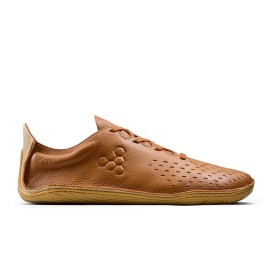
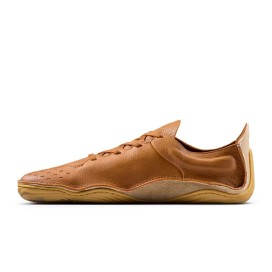
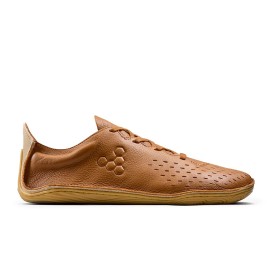
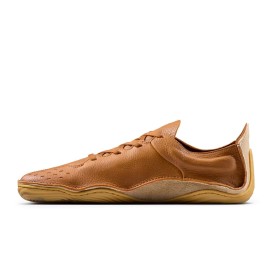
Vivobarefoot Sensus II Grounding
It has a sole of only 3 mm, tremendous flexibility, and conductive construction. It's for anyone who wants maximum ground feel for everyday use.
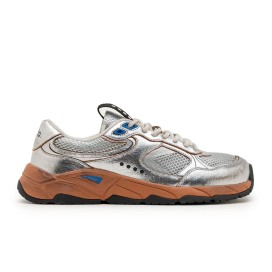
Dada Oromo
It plays a different game: retro sneaker aesthetics and an 8 mm flexible sole. More protection, less extreme ground feel. Very interesting if you come from conventional footwear.
To sum it up: barefoot isn't about taking things away just for the sake of it. It's about leaving between your foot and the ground only what you really need. Don't say I didn't tell you.
Indeed.
Health starts in your feet.
— Antonio Caballo















































 Español
 Português PT
 Deutsch