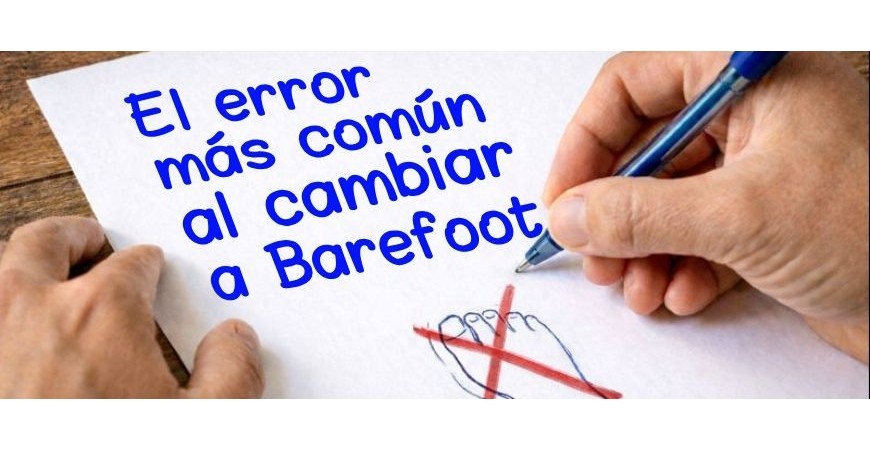
The most common mistake when switching to barefoot (and why many give it up)
Posted on8 Months ago
by
@antonio.caballo
3390
Most people who try barefoot footwear and quit don’t do it because it doesn’t work.
They quit because no one told them the truth at the beginning.
Let me tell you what happened to my friend Fran, who works in steel fixing.
He spends ten hours a day on his feet wearing the same old safety shoes. A beast at work.
His feet are small for the body he carries. And his left Achilles tendon is wrecked.
Heel spurs. Two injections. And even so, he kept wearing narrow little shoes that looked like toys.
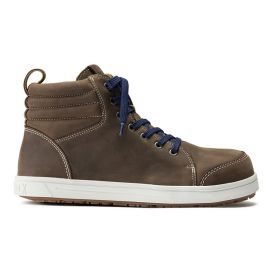
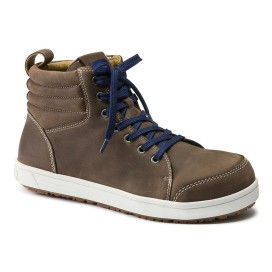
Fed up with everything, he decided to switch to barefoot. And he bought safety boots for work.
No transition. No listening to his body. No understanding it.
The phone rings.
I pick it up and it’s Fran swearing his head off at me. Then he laughs, but keeps complaining.
- Mate, I told you one hour maximum the first day and to increase by ten minutes a day if everything felt fine.
But he did a full shift, and the next day he couldn’t move. The entire back of his leg was one solid block.
This is the most common mistake when starting with barefoot footwear. Doing more than your body is ready for — and in his case, with the heel spur issues he already had.
So, since he isn’t capable of taking it step by step, we did something else.
A practical solution.
He got himself some Mustang shoes with transition insoles.
Not because they’re “better”, but because in his case he needed transition and heel lift.
Plus, that way he could use the transition insole both in the barefoot safety boots and in the Mustang shoes for everyday wear.
Result: now he gets through a full workday in barefoot safety boots and walks much better outside of work.
You’ll see.
Switching to barefoot isn’t an act of faith. It’s an act of common sense.
But of course, when you’ve spent years putting your foot into a hard box, with a heel and a numbing sole, your body learns to survive, not to work properly.
And when you suddenly remove all of that, things happen.
That’s why barefoot isn’t for you if:
- You’ve been running for a long time and don’t want to cut back on training.
- You have ongoing aches or injuries and aren’t willing to go step by step.
- You’re looking for a quick fix without changing habits.
Now I ask you:
Have you had recurring discomfort for a while?
Are you tired of insoles that just patch things up?
If the answer is yes, barefoot footwear — properly approached — is for you.
But careful. This is where almost everyone messes up. It’s not about choosing the best shoe.
It’s about choosing the right footwear for where your feet are today.
Fran didn’t need to tough it out.
He needed a solution that wouldn’t break him more than he already was.
Back to Fran — these were the options that fit best:
Safety boots.
For everyday wear, to strengthen your feet without even noticing, the Mustang shoes with transition insoles.
Also available for women here.
Barefoot footwear doesn’t fail.
What fails is starting as if your body had no history.
Efectiviwonder
Health starts in your feet.
Antonio Caballo.















































 Español
 Português PT
 Deutsch